
Understanding the E-E-A-T Foundation and SEO Evolution
Significant changes have reshaped the blogging and Search Engine Optimization (SEO) landscape since the 2022 Google core updates. Websites targeting sensitive or highly competitive niches suffered sharp declines in traffic and rankings if they ignored E-E-A-T guidelines. For new webmasters and site owners competing in saturated markets, applying core E-E-A-T principles provides a decisive competitive edge.
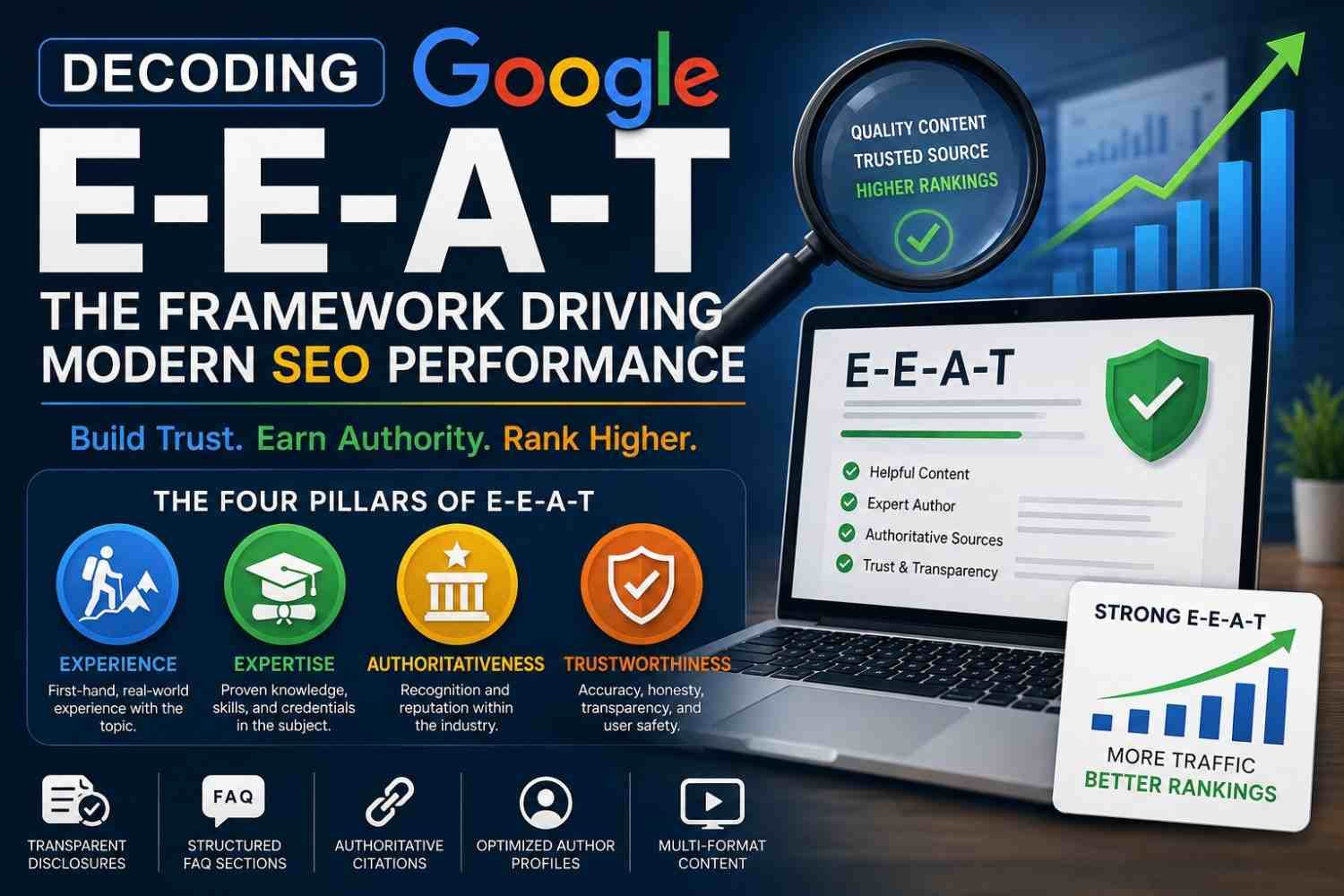
The Four Pillars of the E-E-A-T Framework
E-E-A-T evaluates search quality and content integrity through four fundamental components:
- Experience: Demonstrates whether the author possesses direct, first-hand, practical involvement with the subject matter.
- Expertise: Confirms the writer’s formal credentials, technical knowledge, and subject proficiency in their specific field.
- Authoritativeness: Evaluates the reputation and recognized standing of both the creator and the publication within their industry.
- Trustworthiness: Measures user safety, source honesty, structural transparency, and factual accuracy across the entire domain.
Real-World Execution: The Forbes Blueprint
Analyzing major media platforms such as Forbes demonstrates how authority sites structure content to satisfy quality thresholds:
- Transparency and Commercial Disclosures: Clear identification of sponsored relationships, affiliate monetization, and the exact testing criteria used to evaluate products.
- Structured FAQ Sections: Direct answers that resolve user friction, clarify ambiguities, and satisfy long-tail search intent.
- Authoritative Citations: External outbound links pointing to verified studies, regulatory bodies, or institutional data to corroborate claims—essential for health, finance, and sensitive topics.
Measuring the Impact on Search Rankings and Traffic
Sustained adherence to transparency, clear editorial attribution, fact verification, and recognized source material signals quality to search algorithms. Establishing these signals builds domain-level trust, leading to measurable gains in organic keyword visibility and crawl confidence.
Why Google E-E-A-T Is Critical for Website Rankings and How to Build It
Achieving long-term search visibility without satisfying Google’s E-E-A-T guidelines has become nearly impossible. Google’s core updates emphasize that if a writer publishes on a topic outside their verified area of expertise, the chances of securing high rankings drop sharply. For example, if a digital marketing specialist attempts to rank for parenting advice, search crawlers readily identify the mismatch across the author’s public footprint. Because Experience, Expertise, Authoritativeness, and Trustworthiness are deeply interconnected, site owners must establish these signals directly through optimized author entities, verified credentials, and strategic content execution.
Optimized Author Profiles with Verified Credentials
Every article must feature a comprehensive, fully optimized author bio. This section should explicitly outline the author’s formal background, specific niche focus, practical track record, and verified credentials. Treating author bios as critical trust hubs rather than generic footnotes allows both human evaluators and automated crawlers to immediately assess domain-specific authority.
Authentic Social Media Profile Integration
In addition to site-wide social links, author profile pages and bylines should directly integrate personal links to platforms like LinkedIn and X (formerly Twitter). Connecting active, established personal profiles provides unambiguous entity verification, demonstrating to search systems that the content originates from an accountable human expert rather than an anonymous entity or automated bot.
Strategic Niche-Relevant Guest Posting
When authors actively contribute guest content to reputable, topically aligned publications within their industry, search engines connect these distributed entity references. Having bylines across multiple authoritative external platforms confirms that the writer is a recognized contributor in their niche, which directly reinforces the domain authority of their primary publishing platform.
Digital PR and External Brand Mentions
For established websites operating with dedicated marketing budgets, Digital PR serves as a powerful credibility accelerator. Securing unlinked and linked brand mentions on top-tier news outlets, trade journals, and industry hubs strengthens domain-level authority. Where applicable and legitimate, developing entity citations or structured assets—such as Wikipedia pages—further solidifies institutional trust across search knowledge graphs.
Multi-Format and Video Content Embedding
Embedding topic-specific video assets—such as native YouTube explainers—directly within written guides provides tangible proof of first-hand engagement. Combining visual demonstrations with in-depth written analysis signals that the creator has invested hands-on effort into exploring the topic, validating real-world experience and enhancing audience engagement.
Subject Matter Hiring vs. Rigorous Content Curation
Publishing in a niche without personal subject-matter mastery requires hiring certified, seasoned practitioners who bring established real-world credibility. If initial resource constraints prevent hiring specialized writers, creators must meticulously curate their content—grounding every section in exhaustive research, primary data, and precise formatting to satisfy Google’s strict quality baselines.
People Also Ask (Google-Style FAQs)
What is E-E-A-T in SEO?
E-E-A-T stands for Experience, Expertise, Authoritativeness, and Trustworthiness. It is a set of evaluation criteria used in Google’s Search Quality Rater Guidelines to measure content quality and source credibility.
Is E-E-A-T a direct Google ranking factor?
No, E-E-A-T is not a single direct algorithmic ranking factor or numeric score. Instead, Google uses automated signals and algorithmic systems that aim to align with the human concepts of E-E-A-T.
How do you show experience on a website?
You can show experience by adding first-person insights, original product photography, hands-on testing notes, personal case studies, and detailed breakdowns of practical implementation.
Why is trust the most important part of E-E-A-T?
Trust is the central pillar of E-E-A-T because untrustworthy, deceptive, or inaccurate pages provide poor user safety, making high expertise or authority meaningless to search engines.